



A door that keeps strangers out can also trap your own staff if it is wired the wrong way. Anyone fitting a magnetic lock on an escape route has to settle this first: security matters, but getting people out during a fire is not negotiable. This article covers fail-safe versus fail-secure logic, how to wire a break glass unit, and how to tie access control into the fire alarm panel the way we advise installers to do it.
Rule one: egress must not depend on software
Access controllers fail. A board locks up, firmware hangs, a reader gets hit by a surge. Any door on an escape route therefore needs a way to open from the inside that does not pass through the controller's logic.
A standard exit button wired to the controller's REX input is fine for daily use, but on its own it is not enough: it asks the controller to release the door, and a dead controller releases nothing. Every emergency exit needs two things. A convenient daily exit through the controller, and an emergency release that cuts power to the lock directly or opens it mechanically. The binding reference is always the Egyptian fire code and the civil defence requirements for the building, so review the design with the fire consultant before sign-off.
Fail-safe vs fail-secure
- Fail-safe: the lock needs power to stay locked. Lose power and the door opens. Magnetic locks work this way by nature, and many drop bolts ship fail-safe or let you select it.
- Fail-secure: the lock needs power to open. Lose power and the outside stays locked. Most electric strikes work this way or can be set to it.
Fail-secure is not automatically wrong on an exit door. An electric strike only controls the outside; the inside lever still retracts the latch mechanically, so egress stays free as long as that lever needs no key.
| Lock type | On power loss | Exit from inside | Condition on an escape route |
|---|---|---|---|
| Magnetic lock | Opens (fail-safe) | Cut power to the lock | Break glass at the door plus fire alarm interface |
| Drop bolt | Usually opens, depends on model | Cut power to the lock | Confirm it is set to fail-safe, same conditions |
| Electric strike, fail-secure | Outside stays locked | Inside lever, mechanical | Inside lever always free, no keyed cylinder inside |
| Electric strike, fail-safe | Opens from outside | Inside lever, mechanical | Fine for egress; door is open from outside during outages |
Wiring the break glass correctly
The green emergency door release is the exit path that does not rely on the controller. Most current units use a resettable element instead of real glass, which saves on maintenance.
Wire its contact in series with the lock's positive supply. Pressing it physically removes power from the lock, whatever state the controller is in. A double-pole unit is the better choice: one pole cuts the lock, the other signals a controller input so the event is logged or alarmed.
Tip for installers: never wire a break glass into the controller's exit input as if it were another exit button. That makes the emergency release depend on the very device that might fail.
Mount it beside the door on the exit side, at an easy reach, clear of furniture, with a visible sign. The reset key stays with the security supervisor.
Need technical advice before you buy?
Do Link's sales team helps you choose the right equipment for your site and budget, with special wholesale and project pricing.
Contact the sales team WhatsApp Call us 01098280784 Request a quote
Interfacing with the fire alarm panel
Fire panels normally provide a volt-free relay output that changes state on alarm. Use the normally closed (NC) contact in series with the lock supply: closed in normal operation, open on alarm. A cut cable also releases the doors, so the fault leads to the safe state.
Watch the PSU battery
Access control power supplies usually carry a backup battery that keeps locks engaged during a mains outage. If the fire signal cuts the mains feed into the PSU, the battery simply takes over and the doors stay locked. The cut must be on the PSU output to the locks. Some supplies have a dedicated fire alarm input that does exactly this; check the manual for your model. A software fire input on the controller is useful for logging, but it does not replace the hardware cut.
Worked example: three doors on an escape route
An office has a main entrance and two emergency exits, all on the escape route, each with a magnetic lock of about 280 kg (600 lb) holding force. Locks in this class typically draw around 0.5 A at 12 V; the exact figure is on the datasheet.
- Locks: 3 × 0.5 A = 1.5 A.
- Controller and readers, assume 0.5 A: total 2 A.
- Add at least 30% headroom: 2 × 1.3 = 2.6 A, so a 3 A supply minimum, or 5 A if expansion is likely.
- Two hours of backup: 2 A × 2 h = 4 Ah, so a 12 V 7 Ah battery leaves sensible margin for ageing.
- Fire panel NC contact on the common positive feed from the PSU to the three locks, then a break glass in series on each door's own branch.
Each door now opens on a valid card or exit button, on its own break glass, on fire alarm, or when the battery runs flat after a long outage.
Mistakes we see on site
- Break glass wired to a controller input instead of the lock supply.
- Fire signal cutting the PSU mains, leaving the battery to hold the doors.
- A keyed cylinder on the inside of an exit door fitted with an electric strike.
- No suppression diode across the maglock coil when it is switched by a controller relay. Many locks include one; check.
- The fire interface never tested after handover. Test each break glass monthly and include door release in the fire contractor's routine tests.
How Do Link can help
We supply access control systems and components, including Hikvision access control, ZKTeco controllers and readers, SIB access products, exit push buttons and power supplies. Our technical team will review your wiring logic before installation, and installers and contractors get wholesale and project pricing, with delivery to every governorate in 2 to 3 working days and a one-year warranty.
Have a door schedule for a project? Contact our team to review lock selection and fire interface wiring, or visit any of our three branches in Bab El Louk, open daily from 10 AM to 10 PM.
Recommended products from Do Link
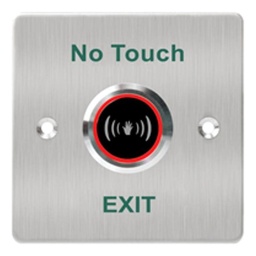 Hikvision DS-K7P03A Touchless Exit & Emergency Push ButtonDS-K7P03A
 ZkTeco Proximity Card Reader – Waterproof Door Lock Card Reader with External LED Control and External Buzzer ControlKR602-E
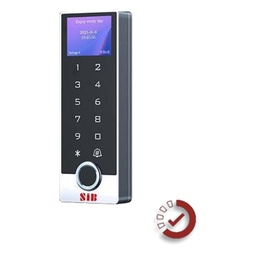 SIB TF2LCD EM-W (Tuya) Fingerprint Access Control, Tuya Wi-Fi, IP68, EM 125KHzTF2LCD EM-W (Tuya)
 ILock LED Push Button (300)iL-PB300
Get a quote from Do Link
Send us your site details and the number of points you need, and Do Link's sales team will reply with suitable models and pricing. Or visit one of our three branches in Bab El Louk, Cairo.
Contact the sales team WhatsApp Call us 01098280784 Request a quote
About Do Link
Do Link for Security Systems is the official Platinum Distributor of Uniview in Egypt, and we supply Hikvision, Dahua, ZKTeco, TP-Link and other global brands for CCTV, networking, intercom and access control. Our products are original with a one-year warranty, pre- and post-sale technical support, and delivery to all Egyptian governorates.
Frequently asked questions
Can a magnetic lock be used on an emergency exit?
Magnetic locks are used on emergency exits in many buildings, provided egress is guaranteed in every scenario: a break glass that cuts lock power directly, a hardwired fire alarm interface, and the door releasing on power loss. The final authority is the Egyptian fire code and the civil defence approval for the building, so review the design with your fire consultant before installation.
What is the difference between an exit button and a break glass unit?
An exit button sends a request to the controller, so it only works if the controller and its firmware are healthy. A break glass unit is wired in series with the lock supply and physically removes power when pressed, without involving the controller. The button is for everyday use; the break glass is the independent emergency path. An exit door on an escape route needs both.
Why use the NC contact from the fire alarm panel?
A normally closed contact keeps power flowing to the locks in normal operation and opens on alarm, releasing the doors. If the cable between the two panels is cut or damaged, the doors also release, so a wiring fault ends in the safe state. A normally open contact can be broken without anyone noticing and then fail to act during a real fire.
Can the PSU backup battery stop doors releasing in a fire?
Yes, if the fire signal cuts the mains feed into the power supply. The battery takes over and keeps the locks energised. The cut must be made on the PSU output that feeds the locks, or through a dedicated fire alarm input if the power supply model has one. Always simulate this scenario during commissioning and confirm every door actually opens.
Is a fail-secure electric strike acceptable on an exit door?
In many cases, yes, because this type only controls opening from the outside while the inside lever retracts the latch mechanically. The condition is that the inside lever always stays free, with no keyed cylinder on the inside, and that this meets the fire requirements for the building. During a power cut the door stays locked from the outside only.