



A barrier gate looks simple: a cabinet, a motor and an arm. Pick an arm that is too long, a motor that cannot take the traffic, or skip the safety sensors, and that simple box becomes a stream of service calls, complaints and possibly accidents. This article sticks to the selection decisions: arm length, opening speed, duty cycle, arm type, and the loops and photocells that keep people and cars safe.
Start with the lane, not the catalogue
Measure the clear lane width from the barrier cabinet to the opposite side. Arm length is roughly that width plus a small overlap onto an arm rest on the far side. Once an arm goes beyond about 4 metres, we always recommend a fixed arm rest: it supports the tip when closed, cuts vibration and takes load off the motor.
Then answer three questions. How many vehicles pass in the peak hour? Is there a low ceiling, as in a car park? Do pedestrians or motorcycles share the lane? Those answers decide the speed, the arm type and the safety devices.
Arm length and speed pull in opposite directions
A longer arm is heavier and has more inertia, so it needs more time to open and stop smoothly. Fast barriers therefore come with short arms, and some models open in around a second or slightly more. Standard barriers with longer arms typically take roughly 3 to 6 seconds. Datasheets quote speed for a specific arm length, so never compare a 3 m figure with a 6 m one. A residential building does not need the fastest model; a factory gate at shift change benefits from every second.
Duty cycle and motor life
Duty cycle describes how long the motor can run without overheating. Barriers built for heavy traffic are usually rated for 100% continuous duty, and many use brushless DC or servo motors with controlled acceleration and braking. Some manufacturers publish MCBF (mean cycles between failures) in the millions, which is a useful comparison figure.
Worked example
An entry lane handles 150 vehicles in the peak hour. One cycle is roughly 1 s to read the card, 3 s to open, 4 s for the car to pass and 3 s to close: 11 seconds. The theoretical maximum is 3600 ÷ 11 ≈ 327 vehicles per hour. Real drivers are not robots, so plan on about 60% of that, around 196 per hour. That covers 150 comfortably. At 300 per hour you need a faster barrier or a second lane.
For lifetime, 1,500 vehicles a day means 1,500 × 365 = 547,500 cycles a year. Compare that with the manufacturer's rating and you will know whether the model suits the site.
Need technical advice before you buy?
Do Link's sales team helps you choose the right equipment for your site and budget, with special wholesale and project pricing.
Contact the sales team WhatsApp Call us 01098280784 Request a quote
Straight, fence or folding arm
| Arm type | Best for | Watch out for |
|---|---|---|
| Straight | Most open-air entrances; longest reach and highest speed | Arm rest for long arms, wind load in open sites |
| Fence | Stopping pedestrians and motorbikes slipping underneath | More weight and wind area, so shorter maximum length and lower speed |
| Folding | Car parks and entrances with low ceilings | Shorter maximum length; the knuckle needs careful adjustment |
Anything added to the arm, such as an LED strip, a skirt or an extension, changes its weight, and the balance spring must be readjusted. One of the most common faults we find is an arm that was lengthened or fitted with a fence without rebalancing, leaving the motor permanently overloaded.
Loops: stopping the arm from landing on a car
An inductive loop is wire laid in a saw cut in the road and connected to a loop detector that senses the metal mass of a vehicle. Barriers typically use a safety loop directly under the arm to block closing while a car is on it, a closing loop after the barrier to close once the car has fully passed, and sometimes a presence loop before the reader.
A common car loop is about 1 m by 2 m, often with 3 to 4 turns at that size, though the detector manual decides the final count. Keep the cut a few centimetres deep, away from shallow rebar and metal covers where possible, separate neighbouring loops properly, and twist the lead-in cable tightly to reject interference.
Tip for installers: a loop cannot see a person. In any lane where someone might stand under the arm, a photocell is essential, not optional.
Photocells, power and installation
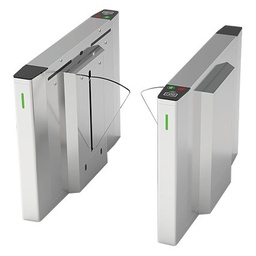
A photocell is an infrared beam across the lane. If it is broken while closing, the arm stops or reopens depending on programming. Mount it at roughly bumper height, on or near the arm's path. When comparing models, also ask about manual release during power cuts and, on some models, a breakaway arm on impact. Put up a no-pedestrians sign and give people their own route, for example a flap barrier lane.
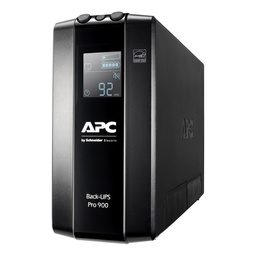
Use a level concrete base with proper anchors and drainage. A suitable UPS keeps the barrier from being stuck closed during outages, and some models offer an internal battery option. Either way, the security team should know how to open the arm by hand.
How Do Link can help
We supply ZKTeco barrier gates and Uniview barriers as part of our vehicle access solutions, along with ZKTeco readers and controllers to open them by card or remote. Our technical team can help you size the traffic, choose arm length and type, and plan loop positions, with project and wholesale pricing for contractors and installers, nationwide delivery and a one-year warranty.
Send us the lane width and the expected peak traffic and we will suggest a suitable model. Contact our sales team or browse the barrier gates in our shop.
Recommended products from Do Link

Get a quote from Do Link
Send us your site details and the number of points you need, and Do Link's sales team will reply with suitable models and pricing. Or visit one of our three branches in Bab El Louk, Cairo.
Contact the sales team WhatsApp Call us 01098280784 Request a quote
About Do Link
Do Link for Security Systems is the official Platinum Distributor of Uniview in Egypt, and we supply Hikvision, Dahua, ZKTeco, TP-Link and other global brands for CCTV, networking, intercom and access control. Our products are original with a one-year warranty, pre- and post-sale technical support, and delivery to all Egyptian governorates.
Frequently asked questions
How long should a barrier arm be?
Roughly the clear lane width from the barrier cabinet to the opposite side, plus a small overlap onto the arm rest. Do not oversize it, because a longer arm opens more slowly and loads the motor more. Beyond about four metres we recommend a fixed arm rest at the tip to support the arm when closed and reduce vibration.
Is an inductive loop enough for safety?
A loop detects the metal mass of a vehicle, so it stops the arm closing on a car underneath. It cannot detect a person. In any lane where someone could stand under the arm, add a photocell, put up a no-pedestrians sign and provide a separate route for people, such as a pedestrian flap barrier lane next to the vehicle lane.
When should I choose a folding arm?
Choose a folding (articulated) arm when there is a low ceiling above the barrier, as in basement car parks. The arm bends as it opens so it does not hit the ceiling. Its maximum length is usually shorter than a straight arm and the joint needs careful adjustment, so in open-air entrances a straight arm stays the simpler and faster choice.
What does 100% duty cycle mean on a barrier datasheet?
It means the motor is designed to run continuously without forced cooling breaks, which is what busy entrances such as factories and malls need. Multiply your daily vehicle count by 365 to get annual cycles, then compare that with the endurance figure the manufacturer publishes for the model before you decide to buy it.
What happens to the barrier during a power cut?
It depends on the model. Most barriers offer manual release with a key or handle, and some support an optional internal battery. You can also feed the barrier from a UPS sized for the motor. Whatever you choose, make sure the security team knows how to raise the arm manually and test it before handover.