



A guard lifting the arm by hand for every car, and a paper log where someone writes the plate number if they remember to. That is still how many compound gates, garages and factories run, and the result is queues at rush hour and a record nobody trusts the first time there is a dispute.
License plate recognition (LPR, also called ANPR) cameras paired with barrier gates fix both problems: registered cars roll through almost without stopping, and every movement is stored with an image and a timestamp. Whether it works, though, depends far more on installation details than on the camera price.
How an LPR camera works
An LPR camera isn't a CCTV camera with software bolted on. It is tuned to capture a reflective plate on a moving vehicle, and runs a recognition engine on the edge:
- Detect the vehicle entering the capture zone, by video analytics or a ground loop detector.
- Locate the plate and segment the characters.
- Read the characters and output the plate number with a confidence score.
- Compare it with a whitelist or blacklist.
- On a match, trigger the barrier and log the event with plate image, vehicle image and time.
One point specific to Egypt: plates carry Arabic letters and digits. Before buying, confirm that the recognition library on the exact model supports Egyptian plates, and test it on real plates if you can. A camera that reads European plates perfectly can perform poorly here.
Placement: height, angle and distance
One of the mistakes we see most on site surveys is an LPR camera on a tall pole looking down at the plate. The picture looks fine, but the characters are squashed vertically and the read rate suffers.
- Angles: most manufacturers recommend keeping both vertical and horizontal angles to the plate under about 30 degrees. The closer to head-on, the better.
- Height: at a gate, roughly 1 to 2 metres on a short side post usually works. Mount higher only if you also move the capture point further out to keep the angle.
- Distance: the capture point is normally a few metres before the arm, so the plate is read and the barrier opens before the car reaches it.
- Plate size in the image: each model's datasheet states a minimum plate width in pixels. Set the varifocal lens to hit it at the capture point. Don't rely on digital zoom.
- One lane, one camera: entry and exit each get their own camera.
Shutter speed and IR
Cars don't fully stop, and any time the shutter stays open turns into blur. At 20 km/h a car moves about 5.56 m per second. At 1/250 s the plate travels about 2.2 cm during the exposure, enough to smear small characters. At 1/1000 s that drops to around 0.56 cm and the characters stay sharp.
| Vehicle speed | m/s | 1/250 s | 1/500 s | 1/1000 s |
|---|---|---|---|---|
| 10 km/h | 2.78 | 1.11 cm | 0.56 cm | 0.28 cm |
| 20 km/h | 5.56 | 2.22 cm | 1.11 cm | 0.56 cm |
| 30 km/h | 8.33 | 3.33 cm | 1.67 cm | 0.83 cm |
A fast shutter lets in less light, which is where infrared comes in. Plates are retroreflective and bounce IR straight back to the camera, so characters stay readable at night even at high shutter speeds. Dedicated LPR cameras expose for the plate rather than the whole scene, which is how they cope with headlights that wash out the plate on an ordinary camera.
Our advice to installers: never sign off after a daytime test. Go back at night, have a car drive in and out several times with headlights on, and check the correct-read rate before handover.
Need technical advice before you buy?
Do Link's sales team helps you choose the right equipment for your site and budget, with special wholesale and project pricing.
Contact the sales team WhatsApp Call us 01098280784 Request a quote
Integrating with the barrier and access control
Direct relay
The simplest and most dependable setup keeps the whitelist on the camera. On a match, the camera closes its relay (alarm out), a dry contact wired to the COM and NO terminals of the barrier controller's open input. The gate keeps working even if the network to the NVR or server goes down, because the decision is made in the camera.
Wiegand to an access controller
Some LPR models send the plate number as Wiegand to an access controller, just like a card reader. The controller then makes the decision, so you reuse its schedules, permissions and reports, for example on a ZKTeco access control system. Use shielded twisted-pair cable and respect the manufacturer's maximum Wiegand run, typically around 150 m.
Logs and lists
Push event images to the NVR or management platform so you can search by plate or date later, and decide who is allowed to edit the whitelist. That list is effectively the key to the gate.
Choosing the barrier and safety devices
Pick the barrier by lane width and traffic. The arm must cover the lane, and opening time matters at busy gates. Low-ceiling garages usually need a folding arm, and factories may want a fence arm to stop pedestrians ducking under.
A loop detector under the arm or a photo-eye is not optional. It stops the arm coming down on a car still underneath and closes the gate automatically once the car has passed.
Also check the duty cycle. A factory gate serving trucks and shift workers can cycle hundreds of times a day and needs a motor rated for heavy use, while a small office garage can take a simpler model. See the wider ZKTeco range at Do Link for barriers, controllers and readers.
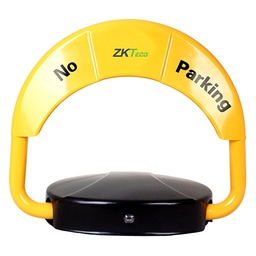
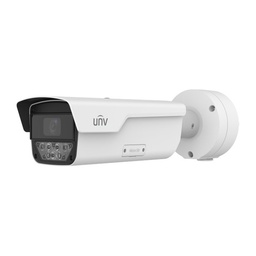
We carry ZKTeco barrier gates and Uniview barrier gates in different arm lengths and speeds, along with Uniview IP cameras; ask our sales team which dedicated LPR models are currently available.
Common mistakes
- A steep angle from mounting the camera high and close.
- Sun or headlight glare straight into the lens, especially on east- or west-facing gates.
- A speed bump right at the capture point. The car pitches up and down and the plate angle changes. Put the bump several metres before the capture zone to slow cars down.
- Leaving the shutter on auto.
- Obstructions that appear later, like a growing tree or a new sign.
- No plan for dirty or damaged plates.
- No backup power. Put the camera and switch on a UPS and make sure the barrier has a safe manual release.
When to add RFID or UHF as a backup
No LPR system reads 100% of plates in every condition: mud, damage, or a new car still waiting for its plates. On compounds and factories where the same vehicles come and go daily, we suggest a long-range UHF reader with a windscreen tag for every resident or staff car. It reads the tag from several metres away and opens the gate even when the plate read fails.
A balanced setup is UHF for residents and staff, and LPR to log every vehicle and manage visitors. On sensitive sites you can require both, opening only when the plate matches the tag registered to it.
How Do Link helps
Do Link for Security Systems is the official Platinum Distributor of Uniview in Egypt. We supply Uniview cameras, ZKTeco and Uniview barriers and access control from one place, with pre- and post-sale technical support on model selection, mounting position and wiring. Products are original with a one-year warranty, with project pricing for contractors and delivery to every governorate.
See our car gate access solutions and access control solutions, then contact our team with your number of lanes and site details and we'll suggest the right setup.
Recommended products from Do Link


Get a quote from Do Link
Send us your site details and the number of points you need, and Do Link's sales team will reply with suitable models and pricing. Or visit one of our three branches in Bab El Louk, Cairo.
Contact the sales team WhatsApp Call us 01098280784 Request a quote
About Do Link
Do Link for Security Systems is the official Platinum Distributor of Uniview in Egypt, and we supply Hikvision, Dahua, ZKTeco, TP-Link and other global brands for CCTV, networking, intercom and access control. Our products are original with a one-year warranty, pre- and post-sale technical support, and delivery to all Egyptian governorates.
Frequently asked questions
Can LPR cameras read Egyptian plates with Arabic characters?
That depends on the recognition library in the specific model, not just the brand. Some models support Egyptian plates with Arabic letters and digits, while others are tuned for other regions. We always check region support in the datasheet or firmware version and test the camera on real plates before committing to a project.
What shutter speed should an LPR camera use at a gate?
At a gate where cars approach at around 20 km/h, a vehicle moves about 5.56 metres per second. A 1/1000 s shutter limits plate movement during capture to under a centimetre, keeping characters sharp, while 1/250 s allows around 2.2 cm of blur. Dedicated LPR cameras combine fast shutter settings with IR to stay clear at night.
Will the barrier still open if the network to the server goes down?
Yes, if the whitelist is stored on the camera and its relay output is wired directly to the barrier controller. The camera then makes the decision on its own. If the decision lives only on a central server or software, a network outage can stop automatic opening, which is why we prefer edge storage with logs pushed to the NVR.
Where should the speed bump go relative to the LPR camera?
Several metres before the capture zone, not at it. The goal is for the car to reach the read point at a low, steady speed. A bump right under the camera makes the front of the car pitch up and down at the moment of capture, changing the plate angle and lowering the correct-read rate, especially with low cars.
Do I need UHF if I already have an LPR camera?
Not always. Commercial garages with mostly visitor traffic are usually fine with a well-installed LPR camera. On compounds and factories with regular vehicles, a UHF reader with a windscreen tag keeps the gate opening in most cases when a plate is dirty or damaged, and on sensitive sites you can require both methods together.