



In a twenty-storey residential tower, intercom is not a doorbell with a screen. You have a hundred or more apartments, a main entrance and maybe a garage gate, a reception guard who needs to know who is calling whom, and a single riser carrying every cable. The key decision comes before choosing any monitor: a two-wire digital system or an IP system on network cabling?
What a tower intercom system is made of
- Main outdoor station at the entrance, usually with a keypad to dial the apartment number or a name directory, often with a card reader or PIN entry.
- Sub-entrance stations for the garage or back door; in compounds, one per building.
- Indoor stations: a monitor or handset in each apartment.
- Guard station at reception, receiving visitor and resident calls, transferring them and calling any apartment.
- The middle layer: floor distributors and system power supplies for two-wire, or switches, copper and fibre for IP.
Two-wire digital systems
In a two-wire digital system, a single pair carries audio, video, data and, in many systems, power. Many are non-polarised, so swapped wires do not stop a unit. A main line runs up the riser, a distributor on each floor feeds a branch to each apartment, and each indoor unit gets an address set by DIP switches or programming.
The big advantage in existing towers is that the pairs already in the conduits can sometimes be reused after testing, instead of pulling new network cable through a crowded riser. Fault-finding also feels familiar to traditional intercom technicians.
The limits are real. Units per branch, maximum distance, wire gauge and the number of power supplies all vary by manufacturer and model. There are no universal figures, and the installation manual of your chosen system is the only reference. Smart features are usually fewer than with IP, although some newer systems add an app through a dedicated gateway.
IP systems
In an IP system every unit is a network device, normally fed by Cat6 from a PoE switch that delivers power and data together. Outdoor stations, the guard station and apartment monitors share one network and are managed centrally.
You gain scale without a single shared line, generally sharper video, and in many systems a mobile app for answering visitors when away, management notices to residents, call and door logs, and integration with CCTV and access control. Some manufacturers also offer lift control integration.
You also take on network discipline: each copper run is limited to 100 m by the Ethernet standard, the intercom deserves its own VLAN, and switches need UPS backup, or the whole tower's monitors go dark in a power cut.
Need technical advice before you buy?
Do Link's sales team helps you choose the right equipment for your site and budget, with special wholesale and project pricing.
Contact the sales team WhatsApp Call us 01098280784 Request a quote
Side-by-side comparison
| Item | Two-wire digital | IP |
|---|---|---|
| Cabling | One pair; existing wiring sometimes reusable | Cat6 per unit; fibre or Cat6 riser |
| Power | System power supplies and floor distributors | PoE switches with UPS |
| Apartment count | Limited by system capacity and branches | Grows by adding switches |
| App and smart features | Limited, or via extra gateway | Usually built in |
| Skills | Intercom technician | Intercom plus networking |
| Best for | Upgrading existing towers, tight budgets | New towers, compounds, integrated projects |
Worked example: a 16-floor tower on IP
16 floors with 6 apartments each gives 16 × 6 = 96 apartments. Floor height is about 3.2 m and the furthest apartment is 25 m from the riser.
- Switch placement: one switch every three floors. Longest run: two floors up, 2 × 3.2 = 6.4 m, plus 25 m horizontal and slack, under 40 m and well inside the 100 m limit.
- Ports: 3 × 6 = 18 indoor stations per switch, so a 24-port PoE switch with an uplink and spares.
- Switch count: 16 ÷ 3 = 5.33, so 6 switches; the last serves one floor and can also feed rooftop cameras.
- PoE budget: assuming 10 W per indoor station, 18 × 10 = 180 W. With 25% headroom you need at least 225 W. Check the real figure on your chosen model's datasheet.
- Riser: the top switch sits about 50 m above the ground-floor network room. Copper may work, but fibre is the better choice in towers: immune to interference, no potential differences between floors, and room to grow.
The guard station and call logic
A frequent problem we see is a technically sound system with no clear operating logic. Agree with building management first: does a visitor call the apartment directly or reception first? What happens if nobody answers? Can residents reach security with one button? Who may open the main entrance remotely? In large towers the guard station should see the outdoor station, transfer calls and receive emergency calls from residents.
Plan numbering before commissioning. The number a visitor dials must match the number on the apartment door, for example floor 12, flat 3 becomes 1203. Keep one table linking each apartment to its distributor or switch port, unit address and, on IP, its IP address, and hand a copy to building management.
Tip for contractors: get the system type fixed before conduits are laid. IP needs larger conduits and boxes for Cat6, plus a powered switch location for every group of floors, which is much harder after finishing.
Mixing both is sometimes possible: some manufacturers offer gateways linking an IP backbone at the main gate to two-wire systems inside each building, useful for compounds with older blocks. Confirm the gateway exists in your chosen system before designing around it.
How Do Link helps with tower projects
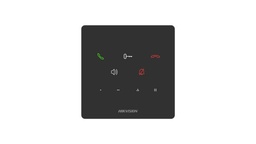
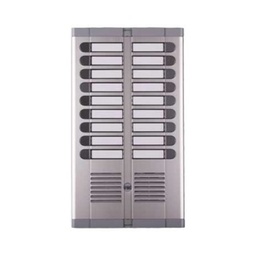
Do Link supplies Hikvision video intercom in IP and two-wire options depending on model, Commax digital intercom and Commax video monitors, Urmet audio intercom, and PoE switches for IP systems. Our technical team reviews drawings, apartment counts and distances with you, with project and contractor pricing, a one-year warranty and support before and after the sale.
See our intercom solutions, or send the tower drawings through our contact page and we will propose a system.
Recommended products from Do Link


Get a quote from Do Link
Send us your site details and the number of points you need, and Do Link's sales team will reply with suitable models and pricing. Or visit one of our three branches in Bab El Louk, Cairo.
Contact the sales team WhatsApp Call us 01098280784 Request a quote
About Do Link
Do Link for Security Systems is the official Platinum Distributor of Uniview in Egypt, and we supply Hikvision, Dahua, ZKTeco, TP-Link and other global brands for CCTV, networking, intercom and access control. Our products are original with a one-year warranty, pre- and post-sale technical support, and delivery to all Egyptian governorates.
Frequently asked questions
Can a two-wire system handle a tower with over 100 apartments?
Many can, but capacity differs by manufacturer and model in terms of units per branch, number of branches, power supplies and distances. Do not rely on general figures; follow the installation manual of the specific system. For very large towers or compounds, IP is usually easier to scale.
Can we reuse the old intercom wiring?
With two-wire digital systems, an existing pair can sometimes be reused if it is in good condition and the conductor size meets the system's requirements. Test insulation and resistance first, because damaged or damp wiring causes intermittent faults that are hard to trace. IP systems usually need new Cat6 cabling.
What happens to an IP intercom during a power cut?
Units draw power from PoE switches, so if the switches lose power the monitors and outdoor stations stop. Put the switches and management equipment on suitable UPS units sized for the backup time you need. Electric locks also need backup power, depending on the lock type and how the door should behave.
Why have a guard station in a tower?
A guard station at reception takes visitor calls from the outdoor station and transfers them to apartments, and residents can call it directly for emergencies or services. In many systems it can view the entrance camera, open the door and log calls. It is especially useful where management wants every visitor to pass through security first.
Do I need a switch on every floor for IP intercom?
Not necessarily. One switch can serve a group of floors as long as no copper run from switch to unit exceeds 100 m, and the switch has enough ports and PoE budget for its units. In the example in this article, a 24-port switch serves three floors of six apartments each.