



Buying twenty identical IP phones for the whole company looks efficient on paper, but it rarely suits everyone. Reception needs plenty of keys to watch extensions, managers want clearer audio and a better screen, and the phone in the warehouse corridor just needs to survive. This article splits IP phones into practical tiers and explains the specs that actually matter: PoE and network ports, HD voice, BLF keys and Wi-Fi models.
Three tiers cover almost every office
Series names differ between brands, but Fanvil, Grandstream and others fall into three working tiers. Price is part of it. The real point is matching the phone to the person using it eight hours a day.
| Tier | Typical user | Screen | SIP accounts | Network port |
|---|---|---|---|---|
| Entry | General staff, warehouse, corridor, security room | Small, monochrome | Usually 1 to 2 | 10/100 on many models |
| Mid-range | Office staff, sales, customer service, reception | Larger, sometimes colour | Roughly 2 to 6 | Usually Gigabit |
| Executive | Senior management, assistants, small meeting rooms | Large colour or touch | 6 or more on most models | Gigabit, with Bluetooth or Wi-Fi on some models |
Treat those figures as ranges, not rules; the datasheet of each model has the final word. In a 30-person company you typically need two or three executive phones, a mid-range unit for reception and a mix of entry and mid-range for everyone else.
PoE and network ports
Working out the PoE budget
PoE under IEEE 802.3af powers the phone over the network cable, so there are no adapters on every desk, and phones keep working through a power cut if the switch and PBX sit on a UPS. Some entry models come in two versions, with and without PoE, so read the model name carefully.
The standard groups devices into power classes, and a switch reserves power per port by class: 4 W for class 1, 7 W for class 2 and 15.4 W for class 3. Most desk phones are class 1 or 2; large-screen phones or phones with expansion modules can be class 3.
Worked example: 20 class 2 phones plus 4 class 3 executive phones. Reserved power = (20 × 7) + (4 × 15.4) = 140 + 61.6 = 201.6 W. That is the worst case, and many smart switches allocate by actual draw, but we would still pick a switch with around 250 W of PoE budget (roughly 20% above the reservation) to leave headroom. The Grandstream switch range has suitable options.
Gigabit or 10/100 pass-through?
Most IP phones have a second port so the PC can plug in behind the phone, which halves the network points you need. If the phone is 10/100, though, that PC is capped at 100 Mbps. Where staff move large files, go Gigabit or give the PC its own point.
HD voice: when you actually hear it
G.711 carries roughly 300 to 3400 Hz, the same band as an old landline. G.722 carries 50 to 7000 Hz, so names and numbers come through far more clearly. Some phones also support Opus, which adapts to network conditions.
The catch is that both ends and the PBX must support the same codec. An internal call between two G.722 phones is wideband; a call that leaves through a landline or mobile trunk usually drops back to narrowband. On the network, G.722 uses the same 64 kbps payload as G.711, about 87 kbps each way on Ethernet with 20 ms packets. Ten simultaneous calls stay under 1 Mbps each way.
Tip for installers: a cheap headset undoes everything G.722 offers. If someone spends the day on a headset, pair the phone with a wideband headset that fits its port.
Need technical advice before you buy?
Do Link's sales team helps you choose the right equipment for your site and budget, with special wholesale and project pricing.
Contact the sales team WhatsApp Call us 01098280784 Request a quote
BLF keys turn a phone into a switchboard
A BLF (Busy Lamp Field) key is programmed to one extension and lights up to show whether it is idle, ringing or on a call. One press calls it, transfers a caller to it or picks up its ringing call. This is what makes a reception phone useful.
Count the extensions reception has to watch. Twelve can fit on a mid-range phone with paged keys. Beyond 30 or 40, choose a model that accepts a side expansion module, and check how many modules it supports. The same keys can handle speed dial, queue login, call park or opening a SIP door station.
Wi-Fi desk phones
Grandstream and Fanvil both offer desk phones with built-in Wi-Fi; in some series a "W" in the model name signals this, but confirm on the datasheet. They suit temporary offices, rooms that are hard to cable and older buildings where you cannot run new wiring.
They need solid Wi-Fi at the desk, ideally on 5 GHz, with voice QoS on the access points where possible, and they still need a power adapter. If staff need to walk around the building while on a call, DECT cordless handsets are usually the better tool.
Mistakes we see on office fit-outs
- Buying phones before choosing the PBX. SIP phones work with most systems, but auto-provisioning and central management are easiest when the PBX officially supports the phone, such as Grandstream phones with Grandstream UCM PBXs.
- Ignoring account count. Someone answering for two departments needs multiple SIP accounts or proper ring groups on the PBX.
- No voice VLAN. A separate VLAN with QoS stops choppy audio when cameras or downloads load the network.
- Touchscreens for everyone. Executive phones earn their price in the boardroom, not on a desk that makes five calls a day.
How Do Link helps
Do Link stocks Grandstream IP phones, Fanvil IP phones and Hikvision IP phones, along with the PBXs and switches for a complete project. Our technical team helps you assign tiers and size PoE before you buy, and supports you after installation. Products are original with a one-year warranty, wholesale and project pricing is available, and we deliver to every governorate in 2 to 3 working days or you can visit our three branches in Bab El Louk.
Planning a new office or replacing old handsets? Have a look at our PBX and telephony solutions, then contact our sales team with your headcount and roles, and we will propose a phone mix with a quotation.
Recommended products from Do Link
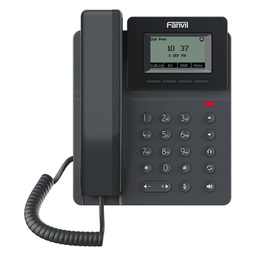
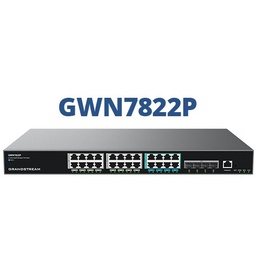
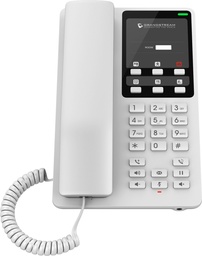
Get a quote from Do Link
Send us your site details and the number of points you need, and Do Link's sales team will reply with suitable models and pricing. Or visit one of our three branches in Bab El Louk, Cairo.
Contact the sales team WhatsApp Call us 01098280784 Request a quote
About Do Link
Do Link for Security Systems is the official Platinum Distributor of Uniview in Egypt, and we supply Hikvision, Dahua, ZKTeco, TP-Link and other global brands for CCTV, networking, intercom and access control. Our products are original with a one-year warranty, pre- and post-sale technical support, and delivery to all Egyptian governorates.
Frequently asked questions
Do Fanvil phones work with a Grandstream or Yeastar PBX?
In most cases, yes. These phones use the open SIP standard, so they can register on any IP PBX that supports it. The difference is in auto-provisioning and central management, which are easier when the phone is on the PBX's officially supported list. Check the compatibility list before ordering a large batch.
How much PoE power does an IP phone need?
Most desk phones are PoE class 1 or 2, so the switch reserves 4 W or 7 W per port. Large-screen phones or phones with expansion modules can be class 3, which reserves 15.4 W. Add up the reservations for every phone and choose a switch with at least 20% more PoE budget than the total.
Do IP phones need a fast internet connection?
Internal calls never touch the internet; they run on your LAN. External calls through a SIP provider use about 87 kbps each way per call with G.711 or G.722, and much less with G.729. Stability matters more than raw speed, so enable QoS on the router and switches.
What is the difference between a BLF key and a speed dial key?
A speed dial key simply calls a number. A BLF key also shows the live status of an extension, idle, ringing or busy, and lets you transfer or pick up a call with one press. That makes BLF essential at reception and for assistants, while speed dial is enough for most staff.
When should I choose a Wi-Fi desk phone instead of a wired one?
Choose Wi-Fi when running a network cable to the desk is difficult, for example in an older building or a temporary office, and only if Wi-Fi coverage at that spot is strong and stable. Where network points exist, a wired PoE phone is more reliable and needs no adapter. If people walk around during calls, DECT is the better fit.