



A two-second power cut is enough to reboot an NVR and lose minutes of recording, and repeated voltage swings will eventually kill a PoE switch power supply or a server drive. Too many UPS units are bought on the VA figure printed on the box, and the buyer only discovers at the first outage that the unit cannot carry the load or dies after a few minutes. Here is how we size a UPS for CCTV, network racks and servers with numbers instead of guesswork.
Offline, line-interactive or online
Offline (standby) passes mains straight to the load and switches to battery only when power fails, with a transfer time of a few milliseconds. Cheapest option, fine for a home router or desktop, but it handles every sag or surge by going to battery.
Line-interactive adds AVR, which boosts low voltage and trims high voltage without touching the battery. That matters wherever voltage drops at peak hours. It is the usual choice for small and mid-size camera systems and office racks; APC's Back-UPS range is a well-known example.
Online double-conversion converts AC to DC and back again all the time, so the load always runs from the inverter with zero transfer time. It isolates equipment from voltage and frequency swings and copes well with generators. This is the right class for servers and critical recording, at the cost of a higher price, more heat and louder fans.
| Item | Offline | Line-interactive | Online |
|---|---|---|---|
| Transfer time | a few ms | a few ms | zero |
| AVR | no | yes | full, continuous |
| Battery waveform | usually stepped | stepped or pure, by model | pure sine |
| Best fit | home router, PC | CCTV, office rack | servers, critical loads, generators |
VA vs watts
VA is apparent power; watts are what your equipment actually draws. Watts = VA × power factor. The APC BX1200MI, for example, is rated 1200VA but only 650W, a power factor of about 0.54. Many modern online units run at 0.9 or 1.0, so a 3000VA unit at 0.9 gives 2700W. Size in watts, compare with the watt rating in the datasheet, and keep the load at 70 to 80% of it.
Worked example: a CCTV system
An NVR with four drives, a 16-port PoE switch feeding 12 cameras, a router and a monitor. Take maximum figures from datasheets, since IR cameras draw more at night. These numbers are illustrative:
| Device | Approx. draw |
|---|---|
| NVR with 4 drives | 45W |
| PoE switch: 12 cameras × 6W = 72W, plus 15W for the switch | 87W |
| Router | 15W |
| 22-inch monitor | 25W |
| Total | 172W |
Add 25% for growth: 172 × 1.25 = 215W. To stay at or below 80% load: 215 ÷ 0.8 ≈ 269W, so look for roughly 300W real capacity or more. At a 0.6 power factor that is 300 ÷ 0.6 = 500VA minimum. On load alone a small unit would do. The real question is runtime.
Need technical advice before you buy?
Do Link's sales team helps you choose the right equipment for your site and budget, with special wholesale and project pricing.
Contact the sales team WhatsApp Call us 01098280784 Request a quote
Runtime and battery math
Battery energy in Wh = voltage × Ah × number of batteries. Not all of it is usable: inverter efficiency is roughly 85 to 90%, and Ah ratings are quoted at a slow 20-hour discharge, so capacity drops at high current. For loads that drain the battery in under an hour we apply a derating factor of 0.6 to 0.7.
Runtime (hours) ≈ (V × Ah × batteries × inverter efficiency × derating) ÷ load in W
With our 172W actual load and a UPS holding two 12V 9Ah batteries (12 × 9 × 2 = 216Wh):
- Low estimate: 216 × 0.85 × 0.6 ÷ 172 = 0.64 h, about 38 minutes.
- High estimate: 216 × 0.9 × 0.7 ÷ 172 = 0.79 h, about 47 minutes.
Treat this as an estimate for a new battery at around 25°C, not a promise. Always check the manufacturer's runtime chart and expect less as the battery ages.
Need 4 hours? 172 × 4 = 688Wh delivered. At a slow discharge the derating improves to about 0.85, so you need 688 ÷ (0.9 × 0.85) ≈ 899Wh nominal. On a 24V system that is 899 ÷ 24 ≈ 37Ah, meaning two 12V 40Ah batteries in series. That will not fit inside a small UPS: you need a model that accepts external battery packs or a long-runtime model with a stronger charger, because a small charger may take a day or more to refill a large bank. See Schneider UPS accessories for options that match your model.
AVR, pure sine wave and form factor
Egypt's nominal supply is 220V 50Hz, but it moves through the day. AVR corrects that without cycling the battery, which extends battery life. Online units always output a pure sine wave; some budget units output a stepped approximation on battery. Cameras and routers usually cope, but servers and active PFC power supplies may shut down or run hot. For servers, pure sine only.
Rack units fit 19-inch racks, usually 1U to 3U, need rails because of their weight, and go at the bottom. Check depth: some will not fit a 600 mm rack. Tower units suit offices and guard rooms without a rack, and some models convert between both.
On generator sites, the UPS only needs to bridge the minutes until the generator starts and settles. Small generators drift in frequency, and some line-interactive units refuse that input and stay on battery; online units handle it better. Servers also need an orderly shutdown before the battery runs out, through USB and the vendor's software, such as APC PowerChute, or a network management card for racks with several servers.
Surges and lightning
A UPS is not a lightning arrester. It handles minor spikes, but serious surges need an SPD at the distribution board and proper earthing. Data lines matter too: an outdoor camera on a distant pole can carry a surge straight into the switch over the network cable, so protect long outdoor runs. We carry Schneider surge protectors for smaller loads.
Tip for installers: put the PoE switch, router and ISP modem on the same UPS as the NVR. One of the most common cases we see is an NVR running on battery while every camera is dark because the switch was plugged into a wall socket.
Battery life and common mistakes
The VRLA batteries in most UPS units have a design life of 3 to 5 years at 25°C, and as a rule of thumb every 10°C above that roughly halves it, which is very real in a closed equipment room in an Egyptian summer. Keep the room ventilated or cooled, run self-tests, replace batteries as a full set with the same type and capacity, and replace any swollen or hot battery immediately.
- Choosing by VA and ignoring watts.
- Plugging a laser printer, heater or air conditioner into the UPS.
- Running at 100% load and expecting long runtime.
- Servers without shutdown software over USB or a network card.
- Never testing the UPS until a real outage.
- Installing it in a closed cabinet with no airflow.
How Do Link helps
We carry APC/Schneider UPS units across their ranges, Delta UPS units, plus accessories and surge protection. Because we also supply CCTV systems and networking solutions, our technical team can calculate load and runtime from your equipment list before you buy. We offer wholesale and project pricing, delivery to every governorate in 2 to 3 working days, or pickup from our Bab El Louk branches.
Send us your equipment list and target runtime through our contact page or on WhatsApp at 01098280784, or browse APC/Schneider UPS units in the shop.
Recommended products from Do Link
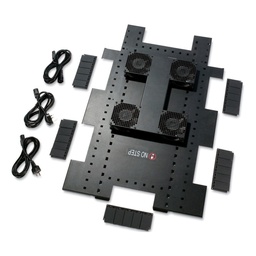 APC Roof Fan Tray 208/230VAC 50/60HZ for NetShelter SX 600mm Wide x 1070mm Deep EnclosuresACF502
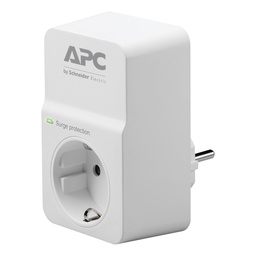 APC Home/Office SurgeArrest 1 outlet 230V, GermanyPM1W-GR
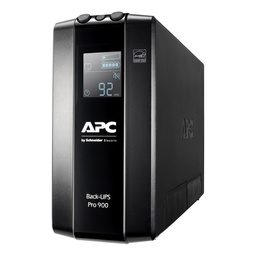 APC Back-UPS Pro, 900VA/540W, Tower, 230V, 6x IEC C13 outlets, AVR, LCD, User Replaceable BatteryBR900MI
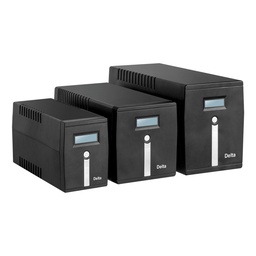 Delta MICRO600 Line Interactive UPS 600 VAMICRO600
Get a quote from Do Link
Send us your site details and the number of points you need, and Do Link's sales team will reply with suitable models and pricing. Or visit one of our three branches in Bab El Louk, Cairo.
Contact the sales team WhatsApp Call us 01098280784 Request a quote
About Do Link
Do Link for Security Systems is the official Platinum Distributor of Uniview in Egypt, and we supply Hikvision, Dahua, ZKTeco, TP-Link and other global brands for CCTV, networking, intercom and access control. Our products are original with a one-year warranty, pre- and post-sale technical support, and delivery to all Egyptian governorates.
Frequently asked questions
What is the difference between VA and watts on a UPS?
VA is apparent power, while watts are the real power your equipment draws; the power factor links the two. The APC BX1200MI, for example, is rated 1200VA but delivers only 650W. Always add up your load in watts, compare it with the watt rating in the datasheet, and stay within 70 to 80% of it.
Which UPS type is best for a CCTV system?
A line-interactive UPS with AVR suits most small and mid-size camera systems. If recording is critical, the site runs on a generator, or servers are involved, choose online double-conversion. Either way, put the PoE switch on the same UPS as the NVR, otherwise the cameras go dark while the recorder keeps running.
How do I estimate UPS battery runtime?
Multiply battery voltage by Ah and the number of batteries, then by inverter efficiency and a derating factor of 0.6 to 0.7, and divide by the load in watts. Two 12V 9Ah batteries on a 172W load give roughly 38 to 47 minutes. It is only an estimate, so confirm with the manufacturer's runtime chart.
How often should UPS batteries be replaced?
VRLA batteries have a design life of 3 to 5 years at 25°C, and heat shortens it sharply: roughly half the life for every extra 10°C. Watch self-test results, replace batteries as a complete set with the same type and capacity, and change any swollen or hot battery straight away.
Do I need a pure sine wave UPS?
Yes for servers and equipment with active PFC power supplies, which can shut down or overheat on a stepped waveform. Most cameras, routers and switches tolerate the stepped output of budget units. Online UPS units always deliver a pure sine wave, while line-interactive models vary, so check the datasheet.