



A farm is not a villa and it is not a factory. The gate, the stores and the pump room can be hundreds of metres apart, there is rarely a fixed internet line, and the power goes off or fluctuates. Systems designed with a city mindset fail here: a good camera on a distant pole, with no cable to reach it and no power to last the night.
Here is how we plan these sites, from the map to the perimeter.
Start with a site map, not a shopping list
One of the most common mistakes we see is starting with "how many cameras do I need?". The better question is where theft and intrusion actually happen. Sketch the site with rough distances, or use a satellite image, and mark the gate, fence, stores, guard room and power source. Then split the site into zones, each with a clear goal.
| Zone | Goal | Typical solution | Usual link |
|---|---|---|---|
| Main gate | Recognise people and vehicles | Camera with the right lens for the distance, good lighting | Cat6 to the guard room |
| Fence and perimeter | Detect intrusion at night | Cameras with line crossing and human/vehicle classification | Fiber or wireless, depending on distance |
| Stores and equipment | Record who goes in and out | One camera per store door | Cable or fiber |
| Pump room or well | Deterrence and alerts | Standalone solar camera with a 4G SIM | Direct 4G |
Linking distant points: copper, fiber or wireless
Copper. Cat6 is good for up to 100 m per channel, patch cords included. Beyond that, performance and PoE suffer. Between nearby buildings copper is fine, as long as it runs in buried conduit away from machinery and rodents. See our CCTV cables.
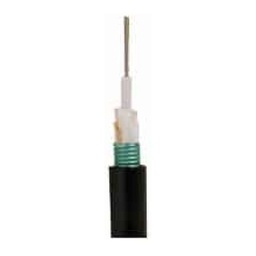
Fiber. For a few hundred metres or more, fiber is the stable choice. It does not carry induced lightning surges or electrical noise, and it connects switch to switch through SFP modules or a media converter at each end. We stock cable and accessories in the ProLink fiber optic range.
Point-to-point wireless. When trenching is expensive or impossible, a 5 GHz link between two outdoor units works well. It needs clear line of sight, and seeing the far end with your eyes is not enough: the signal needs a clear zone around the straight line, called the Fresnel zone. On a 1 km link at 5.8 GHz its radius at mid-path is about 3.6 m, and you want at least 60% of it clear, roughly 2.2 m above trees and roofs. On farms, watch the trees: what is clear today may be blocked in two seasons, so use masts with height to spare.
4G internet: what you can really upload
At most remote sites a 4G router is the only way to view remotely. The usual mistake is assuming the cameras will stream to the cloud all day. Do the maths for one camera on a 2 Mbps substream, 24 hours a day:
2 Mb × 86,400 s ÷ 8 = 21,600 MB, about 21.6 GB per day for a single camera.
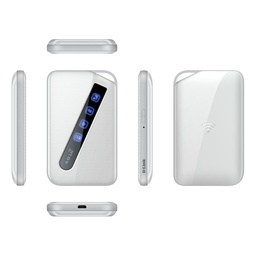
That burns through a normal data bundle in days. Record locally on an NVR on site and use the internet for on-demand viewing and alerts. Mount the router high or choose one with external antenna support, and test signal from more than one operator before buying the SIM. Browse our D-Link 4G routers.
Need technical advice before you buy?
Do Link's sales team helps you choose the right equipment for your site and budget, with special wholesale and project pricing.
Contact the sales team WhatsApp Call us 01098280784 Request a quote
Power: grid, UPS and solar
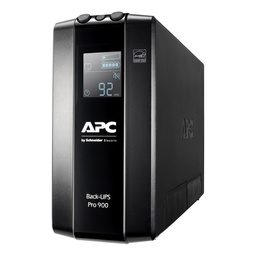
Everything on site must keep running through a power cut, otherwise the cameras are off exactly when a thief chooses to come. Put the recorder, switch and router on a Schneider UPS or similar, and size it on battery runtime, not VA rating alone.
For a fully isolated point, such as a pump room a kilometre away, solar makes sense. A rough example:
- A 6 W camera plus a 6 W 4G router is 12 W, or 288 Wh per day.
- Two days without sun on a lead-acid battery used to 50% depth: 576 ÷ 0.5 = 1,152 Wh, about 96 Ah at 12 V, so a 100 Ah battery.
- Assuming a conservative 5 peak sun hours: 288 ÷ 5 ≈ 58 W; with about 30% losses that is around 82 W, so a panel of at least 100 W.
These are guide figures. Camera draw rises at night with IR on and winter sun is weaker, so we check each datasheet before supplying.
Perimeter protection without false alarms
Nobody watches a long fence all night. You rely on analytics in the camera or NVR: line crossing or intrusion zones, with human/vehicle classification. That classification is what filters out the dogs, birds and moving trees that are everywhere on a farm.
- Aim cameras along the fence, not across it, to cover more length.
- Pick a night range longer than you need; datasheet figures are measured in ideal conditions.
- Some cameras add an audible alarm and strobe light on detection, a useful deterrent where there is no guard.
There are many options among Uniview IP cameras and Hikvision IP cameras, and our team can match a model to each distance.
Dust, heat and lightning
Outdoor gear on farms faces direct sun, dust and irrigation humidity. Ask for IP66 or IP67 on cameras and junction boxes, and use UV-resistant outdoor cable. Tall metal poles in open land attract lightning, so earth the poles and cabinets properly and fit surge protection on the data line at both ends of any long outdoor run, as well as on the power side.
Tip for installers: leave a short service loop in every outdoor box and seal the cable entries. Most faults we see on farm sites come from water or insects inside the junction box, not from the camera itself.
How Do Link helps
We supply the parts of these systems from brands we work with every day: Uniview, Hikvision and Dahua cameras, TP-Link and D-Link networking, ProLink fiber, and Schneider and Delta UPS units. Our technical team reviews your site plan before you buy and suggests the link and power option for each point, with pre- and post-sale support and a one-year warranty on original products. Installers and contractors get wholesale and project pricing, and we deliver to all governorates in 2 to 3 working days. You can also visit our branches in Bab El Louk, Cairo, or read more about our CCTV solutions.
Start with a clear survey
Send us the approximate location and the points you want covered through our contact page, and we will help you pick cameras and links from the camera range.
Recommended products from Do Link

Get a quote from Do Link
Send us your site details and the number of points you need, and Do Link's sales team will reply with suitable models and pricing. Or visit one of our three branches in Bab El Louk, Cairo.
Contact the sales team WhatsApp Call us 01098280784 Request a quote
About Do Link
Do Link for Security Systems is the official Platinum Distributor of Uniview in Egypt, and we supply Hikvision, Dahua, ZKTeco, TP-Link and other global brands for CCTV, networking, intercom and access control. Our products are original with a one-year warranty, pre- and post-sale technical support, and delivery to all Egyptian governorates.
Frequently asked questions
Can I monitor a farm without a landline internet connection?
Yes. An NVR on site records all cameras locally, and a 4G router is used only for remote viewing and alerts. Recording stays complete even when the signal drops, and data use stays low because you are not streaming all day. Test the signal from more than one operator before choosing a SIM.
What is the maximum network cable length from camera to switch?
The standard allows 100 m per channel, including patch cords at both ends. For longer runs you can add an intermediate powered switch, move to fiber with SFP modules or media converters, or use a point-to-point wireless link where there is clear line of sight between the two ends.
When should I choose a wireless bridge over fiber?
A wireless bridge suits sites where trenching is expensive or impossible and there is clear line of sight with open space around the path. Where trenching is possible and the route is fixed, fiber is more stable and is not affected by weather or growing trees. On farms we always consider future tree height first.
Is a solar camera enough for a distant pump room?
Usually, provided you calculate the daily consumption of the camera and router together, choose a battery that covers the night plus one or two cloudy days, and size the panel to replace that energy with a margin for losses. Mount the panel at a sensible angle and clean the dust off regularly.
How do I cut false alarms on a farm fence?
Use cameras or recorders with human/vehicle classification and enable line crossing rather than plain motion detection. Keep the detection area away from moving trees, set a minimum target size, and review alerts during the first week so you can tune sensitivity to the site.